Filosofía: epistemología y teoría del conocimiento

Humanidades / Filosofía / Filosofía: epistemología y teoría del conocimiento (3616)

Libros Eliminar filtro Humanidades Eliminar filtro Filosofía Eliminar filtro Filosofía: epistemología y teoría del conocimiento Eliminar filtro Quitar filtros
  • Vier Quellen Der Erkenntnis
    Ellis Potter
    Woher wissen wir etwas? Weil es ‚wissenschaftlich bewiesen‘ ist oder ‚in der Bibel steht‘ oder es ‚sich in mir einfach richtig und wahr anfühlt ‘? Wissen wir alles auf gleiche Weise? Passen unterschiedliche Wege der Erkenntnis zusammen in ein Leben und eine Wirklichkeit?In dieser kompakten Ausgabe, dem zweiten Teil einer Trilogie, zeigt der internationale Referent Ellis Potter ...
    Disponible

    13,80 €

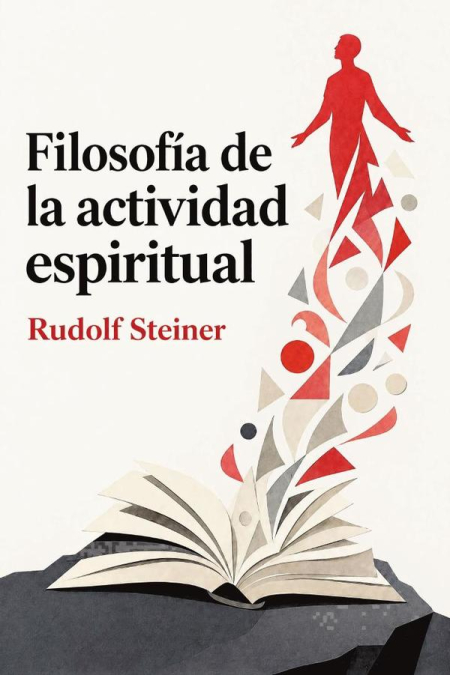
  • Filosofía de la actividad espiritual: Letra Grande
    Rudolf Steiner
    ¿Son sus decisiones verdaderamente propias o nacen de causas que usted no comprende? Rudolf Steiner parte de esta pregunta para indagar en el conocimiento, la individualidad y la acción ética.En Filosofía de la actividad espiritual, Steiner pregunta cómo pueden los seres humanos conocer el mundo y si pueden actuar mediante una auténtica autodeterminación. Se toma en serio el de...
    Disponible

    27,39 €

  • Crítica de la razón pura
    Immanuel Kant
    ¿Y si conocer el mundo dependiera tanto de la mente como del mundo mismo? Kant pregunta qué hace posible el entendimiento humano y dónde termina su autoridad.Publicada por primera vez en 1781, Crítica de la razón pura investiga los fundamentos y los límites del conocimiento. Kant sostiene que el conocimiento comienza con la experiencia, pero no surge únicamente de ella: la ment...
    Disponible

    27,39 €

  • Tratado de la naturaleza humana
    David Hume
    ¿Qué hace convincente una creencia y por qué la razón cede tan a menudo ante los sentimientos? David Hume convierte estas preguntas cotidianas en una profunda indagación sobre el conocimiento, la acción y la moral.Publicado por primera vez entre 1739 y 1740, Tratado de la naturaleza humana busca comprender la mente mediante la experiencia y la observación. En sus tres libros, d...
    Disponible

    27,39 €

  • Know the Truth: A Critique on the Hamiltonian Theory of Limitation: Large Print
    Jesse Henry Jones
    Is the infinite beyond human understanding—or have philosophers drawn the boundaries of knowledge too narrowly?In Know the Truth: A Critique on the Hamiltonian Theory of Limitation, Jesse Henry Jones disputes Sir William Hamilton’s influential account of the limits of human thought. Hamilton held that knowledge is confined to the conditioned and finite. Jones challenges that re...
    Disponible

    27,47 €

  • Cratylus
    Plato
    Does a name reveal what something truly is—or only what people agree to call it? A familiar word becomes a philosophical puzzle in this searching dialogue about language and truth.In Cratylus, Plato brings Socrates into conversation with Hermogenes and Cratylus over the correctness of names. Hermogenes grounds naming in convention and agreement; Cratylus argues that names posse...
    Disponible

    20,82 €

  • A Treatise Concerning the Principles of Human Knowledge
    George Berkeley
    What if the world is real, but not made of matter existing apart from every mind? Berkeley turns an everyday act of perception into a challenge to our deepest assumptions.First published in 1710, A Treatise Concerning the Principles of Human Knowledge argues that the objects we perceive are ideas, not evidence of an unknowable material substance behind experience. George Berkel...
    Disponible

    20,82 €

  • La voluntad de creer y otros ensayos de filosofía popular: Letra Grande
    William James
    ¿Debemos esperar a tener certeza antes de comprometernos con lo que importa? William James pregunta cómo podemos elegir, actuar y tener esperanza cuando las pruebas no resuelven las cuestiones más profundas de la vida.En La voluntad de creer y otros ensayos de filosofía popular, James pone el argumento filosófico en diálogo con la experiencia personal. El ensayo que da título a...
    Disponible

    27,39 €

  • Pragmatismo: un nombre nuevo para algunas formas antiguas de pensar: Letra Grande
    William James
    ¿Qué diferencia produce una idea en la vida de quien cree en ella? Para William James, esa pregunta abre un camino entre las disputas más persistentes de la filosofía.Publicado por primera vez en 1907, Pragmatismo: un nuevo nombre para algunas viejas formas de pensar presenta ocho conferencias sobre un método para examinar las ideas a través de sus consecuencias prácticas. Jame...
    Disponible

    27,37 €

  • Tiempo y libre albedrío: ensayo sobre los datos inmediatos de la conciencia: Letra Grande
    Henri Bergson
    Un reloj puede contar los minutos, pero ¿puede captar la experiencia de esperar, recordar o elegir?En Tiempo y libre albedrío: Ensayo sobre los datos inmediatos de la conciencia, una de sus obras filosóficas tempranas, Henri Bergson cuestiona la costumbre de tratar la vida interior como algo que puede dividirse y medirse igual que el espacio físico. En el centro de su reflexión...
    Disponible

    27,37 €

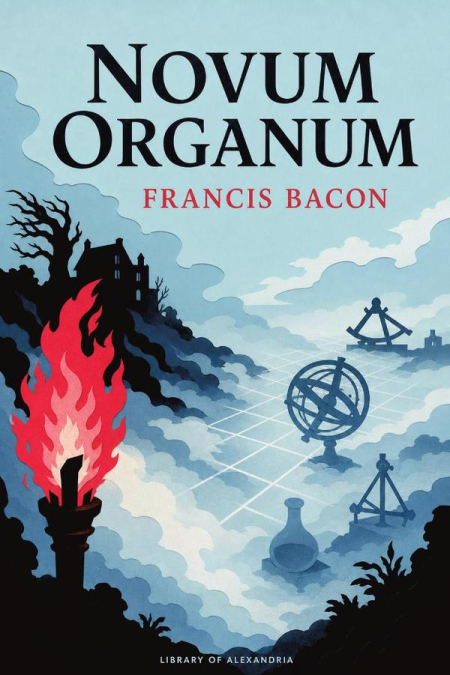
  • Novum Organum
    Francis Bacon
    ¿Qué se interpone entre nosotros y el conocimiento confiable? Francis Bacon sostiene que los obstáculos no están solo en el mundo que estudiamos, sino también en los hábitos de nuestra propia mente.Publicado en 1620, Novum Organum propone un nuevo método para investigar la naturaleza. Frente a la dependencia de la autoridad heredada y las generalizaciones prematuras, Bacon abog...
    Disponible

    27,37 €

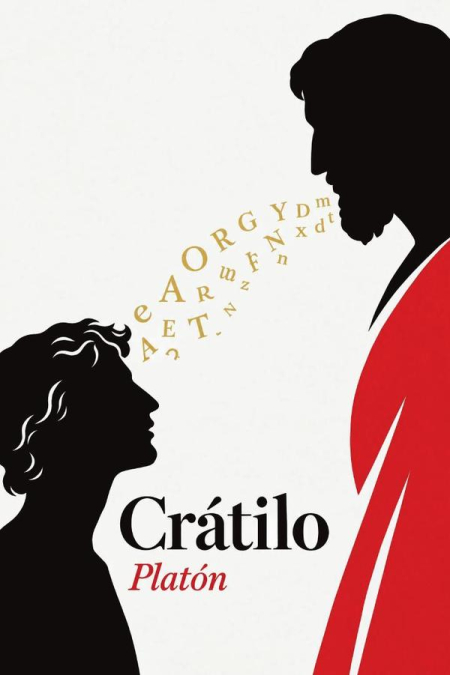
  • Crátilo: Letra Grande
    Platón
    ¿Un nombre revela lo que algo es en verdad o solo cómo acuerdan llamarlo las personas? Una palabra familiar se convierte en un enigma filosófico en este diálogo inquisitivo sobre el lenguaje y la verdad.En Crátilo, Platón pone a Sócrates en conversación con Hermógenes y Crátilo acerca de la corrección de los nombres. Hermógenes sostiene que nombrar depende de la convención y el...
    Disponible

    20,75 €

  • Menón
    Platón
    ¿Se puede enseñar la virtud? Antes de responder, Sócrates plantea una pregunta más difícil: ¿qué es la virtud?En Menón, Platón convierte una conversación aparentemente sencilla en una indagación sobre el bien, el conocimiento y la posibilidad de aprender. Menón quiere saber cómo llegan las personas a ser virtuosas, pero Sócrates le exige definir la cualidad de la que hablan. A ...
    Disponible

    20,75 €

  • Menón: Letra Grande
    Platón
    ¿Se puede enseñar la virtud? Antes de responder, Sócrates plantea una pregunta más difícil: ¿qué es la virtud?En Menón, Platón convierte una conversación aparentemente sencilla en una indagación sobre el bien, el conocimiento y la posibilidad de aprender. Menón quiere saber cómo llegan las personas a ser virtuosas, pero Sócrates le exige definir la cualidad de la que hablan. A ...
    Disponible

    20,77 €

  • Cármides: Letra Grande
    Platón
    El autocontrol parece sencillo hasta que alguien pregunta qué significa en realidad. En este incisivo diálogo socrático, cada respuesta segura abre una pregunta más difícil.Ambientado tras el regreso de Sócrates de la campaña de Potidea, Cármides, de Platón, lo presenta conversando con el apuesto joven Cármides y su pariente Critias. El tema es la sophrosyne, virtud griega que ...
    Disponible

    20,75 €

  • Discourse on the Method
    René Descartes
    What can you know for certain when everything you have learned is open to question? Descartes makes that unsettling question the starting point for a new approach to knowledge.First published in 1637, Discourse on the Method combines intellectual autobiography with a bold account of how to reason well. Reflecting on his education and search for reliable knowledge, René Descarte...
    Disponible

    20,77 €

  • Discourse on the Method: Large Print
    René Descartes
    What can you know for certain when everything you have learned is open to question? Descartes makes that unsettling question the starting point for a new approach to knowledge.First published in 1637, Discourse on the Method combines intellectual autobiography with a bold account of how to reason well. Reflecting on his education and search for reliable knowledge, René Descarte...
    Disponible

    20,77 €

  • A Treatise of Human Nature
    David Hume
    What makes a belief convincing—and why does reason so often yield to feeling? David Hume turns these everyday questions into a searching inquiry into knowledge, action, and morality.First published in 1739–1740, A Treatise of Human Nature seeks to understand the mind through experience and observation. Across its three books—on understanding, the passions, and morals—Hume exami...
    Disponible

    27,39 €

  • The Will to Believe, and Other Essays in Popular Philosophy
    William James
    Must we wait for certainty before committing to what matters? William James asks how we can choose, act, and hope when evidence leaves life’s deepest questions unresolved.In The Will to Believe, and Other Essays in Popular Philosophy, James brings philosophical argument into contact with personal experience. The title essay defends the right to adopt a belief when a genuine cho...
    Disponible

    27,39 €

  • Theaetetus
    Plato
    What do we mean when we say we know something? Before we can defend our beliefs, Socrates asks us to examine what knowledge itself might be.In Theaetetus, Plato brings Socrates into conversation with a gifted young mathematician and his teacher, Theodorus. Together they investigate a deceptively simple question: what is knowledge? They test whether it can be identified with per...
    Disponible

    20,77 €

  • Theaetetus: Large Print
    Plato
    What do we mean when we say we know something? Before we can defend our beliefs, Socrates asks us to examine what knowledge itself might be.In Theaetetus, Plato brings Socrates into conversation with a gifted young mathematician and his teacher, Theodorus. Together they investigate a deceptively simple question: what is knowledge? They test whether it can be identified with per...
    Disponible

    20,82 €

  • Time and Free Will: An Essay on the Immediate Data of Consciousness
    Henri Bergson
    A clock can count the minutes, but can it capture the experience of waiting, remembering, or choosing?Henri Bergson’s early philosophical work challenges the habit of treating inner life as something that can be divided and measured like physical space. At its center is duration: the continuous, qualitative flow of experience in which feelings and memories mingle rather than st...
    Disponible

    27,39 €

  • Kant’s Prolegomena to Any Future Metaphysics
    Immanuel Kant
    What can we truly know—and what do we merely suppose? Kant turns that question into a searching inquiry into the powers and limits of human reason.Published in 1783, Kant’s Prolegomena to Any Future Metaphysics offers a shorter approach to the central questions of Critique of Pure Reason. Rather than simply asking what reality is, Kant asks how knowledge of it becomes possible....
    Disponible

    27,39 €

  • Kant’s Prolegomena to Any Future Metaphysics: Large Print
    Immanuel Kant
    What can we truly know—and what do we merely suppose? Kant turns that question into a searching inquiry into the powers and limits of human reason.Published in 1783, Kant’s Prolegomena to Any Future Metaphysics offers a shorter approach to the central questions of Critique of Pure Reason. Rather than simply asking what reality is, Kant asks how knowledge of it becomes possible....
    Disponible

    27,39 €

  • Novum Organum
    Francis Bacon
    What stands between us and reliable knowledge? Francis Bacon argues that the obstacles lie not only in the world we study, but in the habits of our own minds.Published in 1620, Novum Organum sets out a new approach to investigating nature. Against dependence on inherited authority and premature generalization, Bacon calls for disciplined observation, experiment, and a gradual a...
    Disponible

    27,39 €

  • Cratylus: Large Print
    Plato
    Does a name reveal what something truly is—or only what people agree to call it? A familiar word becomes a philosophical puzzle in this searching dialogue about language and truth.In Cratylus, Plato brings Socrates into conversation with Hermogenes and Cratylus over the correctness of names. Hermogenes grounds naming in convention and agreement; Cratylus argues that names posse...
    Disponible

    20,77 €

  • Charmides: Large Print
    Plato
    Self-control sounds simple until someone asks what it actually means. In this searching Socratic dialogue, every confident answer opens a harder question.Set after Socrates returns from the campaign at Potidaea, Plato’s Charmides brings him into conversation with the handsome young Charmides and his relative Critias. Their subject is sophrosyne, a Greek virtue commonly understo...
    Disponible

    20,77 €

  • The Meaning of Truth
    William James
    What makes a belief worth trusting? William James brings that question out of abstraction and into the world of experience, inquiry, and action.In The Meaning of Truth, James develops and defends his pragmatic account of knowledge. Published in 1909 as a follow-up to Pragmatism, this collection of philosophical essays answers critics and clarifies the relationship between ideas...
    Disponible

    27,39 €

  • The Meaning of Truth: Large Print
    William James
    What makes a belief worth trusting? William James brings that question out of abstraction and into the world of experience, inquiry, and action.In The Meaning of Truth, James develops and defends his pragmatic account of knowledge. Published in 1909 as a follow-up to Pragmatism, this collection of philosophical essays answers critics and clarifies the relationship between ideas...
    Disponible

    27,39 €

  • On the Improvement of the Understanding
    Benedictus de Spinoza
    What is worth knowing—and how can we be sure we know it? Spinoza makes the search for truth inseparable from the search for a life of lasting value.On the Improvement of the Understanding begins with dissatisfaction with the ordinary pursuits of wealth, honour, and pleasure. In their place, Benedictus de Spinoza seeks a good capable of bringing enduring joy. That personal searc...
    Disponible

    20,77 €