Theaetetus

Theaetetus

Plato

20,77 €
IVA incluido
Disponible
Editorial:
Muze Publications
Año de edición:
2026
Materia
Filosofía occidental: antigua, hasta c. 500
ISBN:
9781811112137
20,77 €
IVA incluido
Disponible
Añadir a favoritos

What do we mean when we say we know something? Before we can defend our beliefs, Socrates asks us to examine what knowledge itself might be.In Theaetetus, Plato brings Socrates into conversation with a gifted young mathematician and his teacher, Theodorus. Together they investigate a deceptively simple question: what is knowledge? They test whether it can be identified with perception, true judgment, or true judgment accompanied by an account. Each proposal encounters difficulties that lead the conversation deeper into the workings of thought.The dialogue examines the relation between appearance and reality, the possibility of false belief, and the challenge of explaining why a judgment is true. Socrates describes his role through the image of intellectual midwifery: rather than handing over answers, he helps others bring their ideas into view and test them. The inquiry reaches no settled definition, but its unresolved questions are central to its lasting force. For readers navigating competing claims and uncertain evidence, it offers a demanding model of how to question carefully without pretending that certainty comes easily.What readers find inside:Knowledge and perception — The claim that knowing is perceiving opens a sustained examination of experience and truth.True and false judgment — Socrates asks how the mind can mistake one thing for another and what distinguishes belief from knowledge.Memory and thought — Images of a wax tablet and an aviary explore remembering, possessing knowledge, and making errors.The demand for an account — The speakers consider whether a true judgment needs an explanation before it can count as knowledge.Socratic questioning — Patient exchanges reveal hidden assumptions and show why an attractive answer may still fall short.This work will appeal to students of epistemology, readers of ancient Greek philosophy, and anyone who enjoys following an argument beyond its first persuasive answer.Enter the conversation and put your own understanding of knowledge to the test. 10

Artículos relacionados

  • The Nature of Things
    Lucretius Lucretius
    De rerum natura (On the Nature of Things) is a 1st century BC didactic poem by the Roman poet and philosopher Lucretius with the goal of explaining Epicurean philosophy to a Roman audience. Lucretius presents the principles of atomism; the nature of the mind and soul; explanations of sensation and thought; the development of the world and its phenomena; and explains a variety o...
  • Pompeii
    Fergus Mason
    Pompeii was one of most advanced cities of its time; it had a complex water system, gymnasium, and an amphitheater. Despite it's advancements, there was one thing it wasn't ready for: Mount Vesuvius—the volcano that led to its ultimate doom.  The 79 AD eruption of Mount Vesuvius was one of the worst disasters in all of European history. In a near instant, over 15,000 p...
    Disponible

    12,45 €

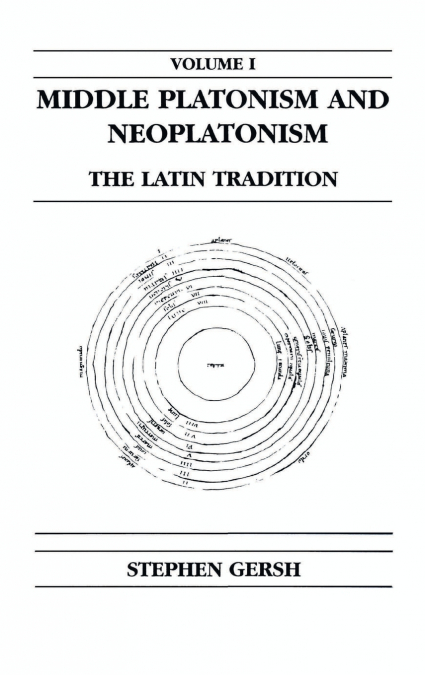
  • Middle Platonism and Neoplatonism, Volume 1
    Stephen Gersh
    'It is generally agreed that those types of philosophy that are loosely called ’Platonic’ and ’Neoplatonic’ played a crucial role in the history of European culture during the centuries between antiquity and the Renaissance. However, until now no scholar has attempted to describe the evolution of these forms of thought in a single comprehensive academic study.' So writes Stephe...
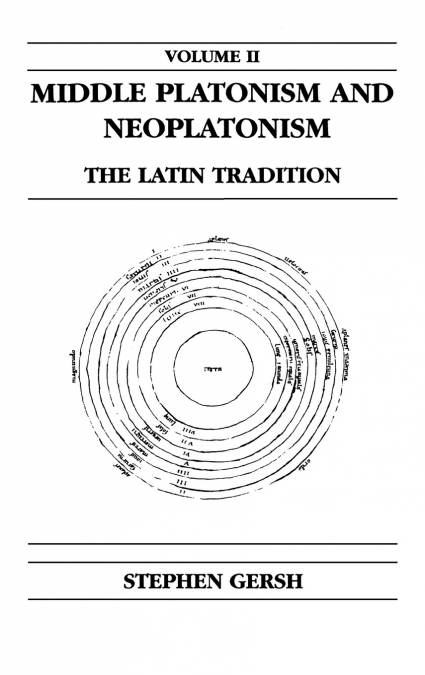
  • Middle Platonism and Neoplatonism, Volume 2
    Stephen Gersh
    It is generally agreed that those types of philosophy that are loosely called 'Platonic' and 'Neoplatonic' played a crucial role in the history of European culture during the centuries between antiquity and the Middle Ages. However, until now no scholar has attempted to describe the evolution of these forms of thought in a single comprehensive academic study. Middle Platonism a...
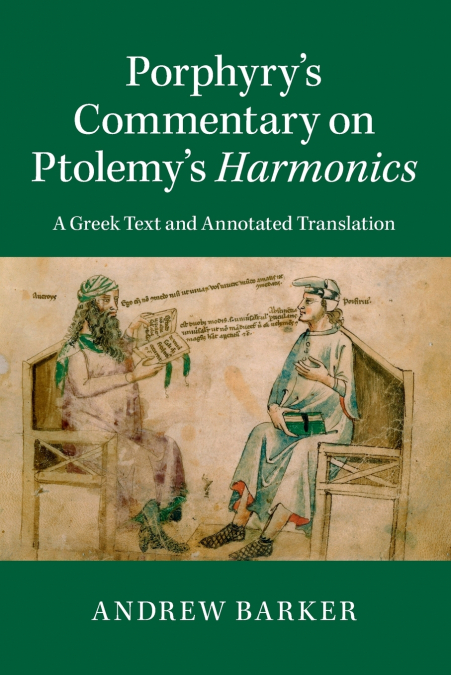
  • Porphyry’s Commentary on Ptolemy’s Harmonics
    Andrew Barker
    ...
    Disponible

    91,02 €

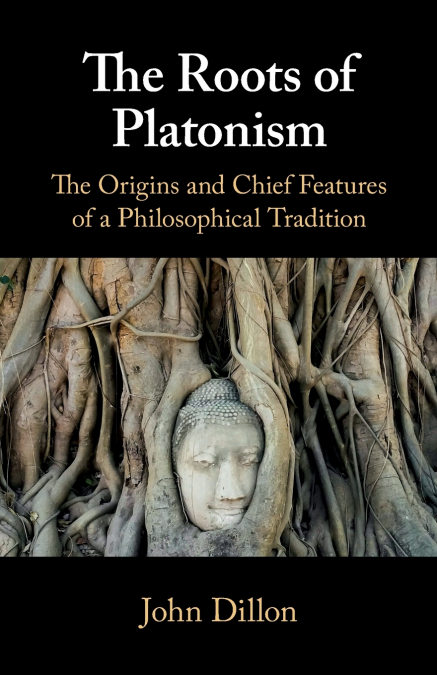
  • The Roots of Platonism
    John Dillon
    ...
    Disponible

    29,89 €

Otros libros del autor

  • Cratylus
    Plato
    Does a name reveal what something truly is—or only what people agree to call it? A familiar word becomes a philosophical puzzle in this searching dialogue about language and truth.In Cratylus, Plato brings Socrates into conversation with Hermogenes and Cratylus over the correctness of names. Hermogenes grounds naming in convention and agreement; Cratylus argues that names posse...
    Disponible

    20,82 €

  • Philebus: Large Print
    Plato
    Is the happiest life the one with the most pleasure—or the one guided by reason? What if neither, on its own, is enough?In Philebus, Plato turns the question of human happiness into a searching philosophical conversation. Socrates and Protarchus debate the claims of pleasure and intelligence, testing whether either can supply everything a good life requires. Their inquiry moves...
    Disponible

    20,82 €

  • The Republic
    Plato
    Why be just when injustice seems to pay? Plato turns that unsettling question into a searching debate about power, truth, and how we should live.In The Republic, Socrates and his companions investigate justice by imagining a city and asking what would make it well governed. Their conversation moves between public life and the inner life: the education of guardians, the responsi...
    Disponible

    27,39 €

  • The Republic: Large Print
    Plato
    Why be just when injustice seems to pay? Plato turns that unsettling question into a searching debate about power, truth, and how we should live.In The Republic, Socrates and his companions investigate justice by imagining a city and asking what would make it well governed. Their conversation moves between public life and the inner life: the education of guardians, the responsi...
    Disponible

    27,39 €

  • Phaedrus
    Plato
    What makes love a path to wisdom—and persuasion more than a clever use of words? A walk outside Athens becomes a searching conversation about desire, truth, and the human soul.In Plato’s Phaedrus, Socrates joins a young admirer of speeches beside the river Ilissus. A speech by Lysias sparks a debate about lovers and those who do not love, leading Socrates to reconsider love as ...
    Disponible

    20,77 €

  • Phaedrus: Large Print
    Plato
    What makes love a path to wisdom—and persuasion more than a clever use of words? A walk outside Athens becomes a searching conversation about desire, truth, and the human soul.In Plato’s Phaedrus, Socrates joins a young admirer of speeches beside the river Ilissus. A speech by Lysias sparks a debate about lovers and those who do not love, leading Socrates to reconsider love as ...
    Disponible

    20,77 €