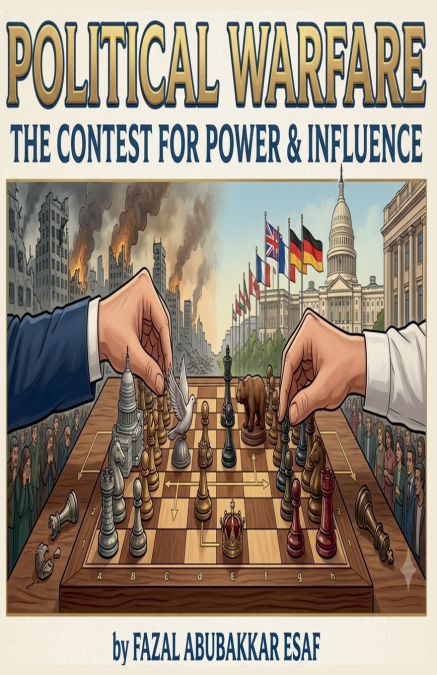
Fazal Abubakkar Esaf
Politics is often described as the competition for votes, offices, policies, and public approval. But beneath these visible contests lies another struggle: the struggle to define reality, shape public attention, build alliances, organize people, influence institutions, and determine which ideas will dominate the political imagination.That deeper struggle is the subject of this book.The phrase political warfare can sound aggressive, cynical, or even dangerous. Politics, however, has always contained an element of strategic competition. Political actors compete for limited resources, public trust, institutional influence, media attention, organizational strength, and ultimately the authority to make decisions on behalf of society. They persuade. They negotiate. They form coalitions. They defend themselves against criticism. They study opponents. They choose when to speak and when to remain silent. They attempt to turn ideas into organized political power.Understanding these processes does not require celebrating every method used in political competition.Indeed, one of the central arguments of this book is that strategic intelligence without ethical judgment can become destructive. A political organization may win an election and still damage the institutions it inherits. A leader may defeat an opponent while weakening public trust. A campaign may create enormous emotional energy while leaving citizens more divided than before. Short-term victory can therefore produce long-term political failure.This book approaches politics through the broader questions of strategy and human behaviour.