Artur Schoenflies
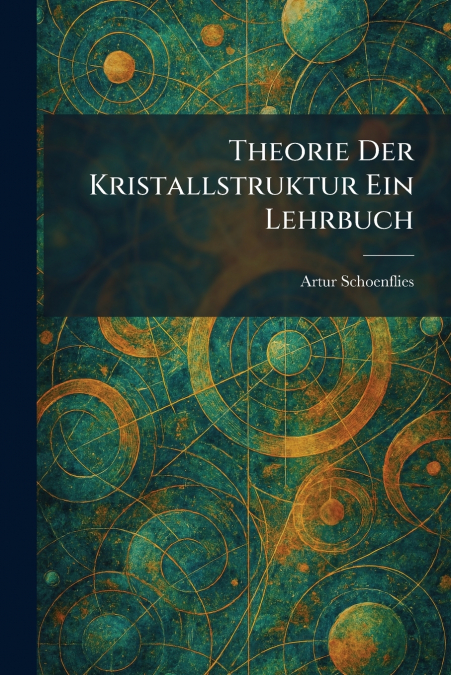
'Theorie Der Kristallstruktur Ein Lehrbuch' von Dr. Artur Schoenflies ist ein wegweisendes Werk der modernen Kristallographie und der mathematischen Physik. Dieses umfassende Lehrbuch bietet eine systematische Einführung in die theoretischen Grundlagen der Kristallstruktur und widmet sich insbesondere der Herleitung der 230 Raumgruppen. Als einer der Pioniere auf diesem Gebiet präsentiert Schoenflies eine tiefgehende Analyse der geometrischen Symmetrien, die die Anordnung von Atomen in Festkörpern bestimmen.Das Buch führt detailliert in die Prinzipien der Punkt- und Translationsgruppen ein und erläutert die mathematischen Operationen, die für das Verständnis physikalischer Kristalle unerlässlich sind. Die klare Strukturierung und die rigorose wissenschaftliche Herangehensweise machen dieses Werk zu einer unverzichtbaren Ressource für Studierende und Forscher der Chemie, Mineralogie und Materialwissenschaften. 'Theorie Der Kristallstruktur' bleibt ein essenzielles Referenzwerk, das die Brücke zwischen abstrakter Mathematik und der physikalischen Realität der Materie schlägt. Es ist ein bedeutendes Zeugnis der wissenschaftlichen Entwicklung des frühen 20. Jahrhunderts und ein Klassiker der theoretischen Naturwissenschaften.This work has been selected by scholars as being culturally important, and is part of the knowledge base of civilization as we know it. This work was reproduced from the original artifact, and remains as true to the original work as possible. Therefore, you may see the original copyright references, library stamps (as most of these works have been housed in our most important libraries around the world), and other notations in the work.This work is in the public domain in the United States of America, and possibly other nations. Within the United States, you may freely copy and distribute this work, as no entity (individual or corporate) has a copyright on the body of the work.As a reproduction of a historical artifact, this work may contain missing or blurred pages, poor pictures, errant marks, etc. Scholars believe, and we concur, that this work is important enough to be preserved, reproduced, and made generally available to the public. We appreciate your support of the preservation process, and thank you for being an important part of keeping this knowledge alive and relevant.