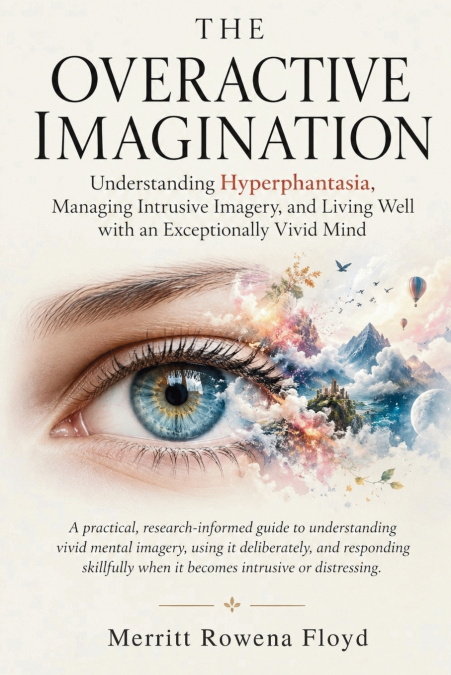
Merritt Rowena Floyd
A practical, research-informed guide to understanding vivid mental imagery, using it deliberately, and responding skillfully when it becomes intrusive or distressing. When Your Imagination Feels Almost Too Real Some people picture a scene faintly. Others can see it with striking clarity, complete with color, movement, sound, texture, and emotion. If your mind can create images so vivid that a simple worry becomes a detailed mental movie, you may be experiencing hyperphantasia, an unusually strong capacity for mental imagery. Understand What Your Mind Is Doing The Overactive Imagination explains hyperphantasia in clear, practical language. It shows how vivid mental imagery can influence memory, creativity, future thinking, worry, intrusive images, and emotional reactions. Rather than treating vivid imagination as either a problem or a special gift, the book helps you understand how imagery works, where its strengths may lie, and what to do when it becomes difficult to manage. A Practical Framework for More Control You will learn to separate vividness from accuracy, voluntary imagery from unwanted imagery, and useful imagination from repetitive mental simulation. The book introduces practical tools for recognizing triggers, reducing engagement with distressing images, responding to catastrophic 'what if' scenes, settling an active imagination before sleep, and using mental imagery more deliberately in creative and everyday life. Why This Book Is Different This is not a celebration of 'superpowers,' and it does not treat hyperphantasia as a diagnosis. It combines accessible discussion of current mental-imagery research with realistic examples, reflection exercises, an imagery profile, an intrusive-imagery log, and a personal operating manual. The goal is to help you build a clearer relationship with a mind that can generate unusually vivid internal experiences. Who This Book Is For This book is for readers who have recently discovered hyperphantasia; people with an overactive or highly visual imagination; adults whose anxiety or rumination takes the form of vivid mental scenes; writers, artists, designers, musicians, and other creatives who rely on mental imagery; and anyone who wants to understand the difference between strong imagination, intrusive imagery, memory, and perception. Live Well With a Vivid Mind You do not need to eliminate imagination to gain more choice in how you respond to it. If you want a clear, evidence-informed and practical guide to hyperphantasia, vivid mental imagery, intrusive images, and the mind’s eye, The Overactive Imagination offers a structured place to begin.