Antonios athenaeus
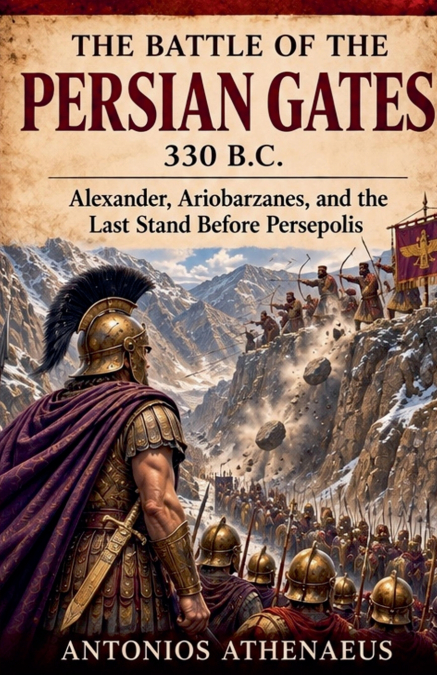
Alexander the Great had defeated Darius at Gaugamela. At the Persian Gates, Ariobarzanes forced him to retreat.In the winter of 331-330 B.C., Alexander marched through Babylon and Susa towards Persepolis, the royal centre of the Persian Empire. The shorter road took his army into the Zagros Mountains, where Ariobarzanes had blocked a narrow pass and posted men on the heights. When the Macedonians entered the defile, stones and missiles struck the column from above. The leading troops had little room to deploy, and the men behind them could do little to help.Alexander divided his force. Craterus stayed below the pass while Alexander led a detachment into the mountains under cover of darkness. To take the position, the two commanders had to bring their troops into action from opposite sides without being able to see each other.The Battle of the Persian Gates follows the campaign from Gaugamela to the occupation of Persepolis. The book gives Ariobarzanes’ defence the same close attention as Alexander’s recovery, examining how the Persian commander used the ground to stop the first assault and why his position became vulnerable once Macedonian troops reached its rear.Drawing on Arrian, Curtius Rufus, Diodorus and modern scholarship, Antonios Athenaeus examines the disputed location of the battlefield, the course of the night march and the conflicting accounts of Ariobarzanes’ fate. A campaign map and five tactical diagrams trace the action, while the appendices provide a chronology, an assessment of troop strengths and losses, and profiles of the principal figures.For readers of ancient military history and Alexander’s campaigns, this is a study of how a mountain pass checked the advance of a victorious army, and what it took to open the road to Persepolis.