Dr. Gil Feiler
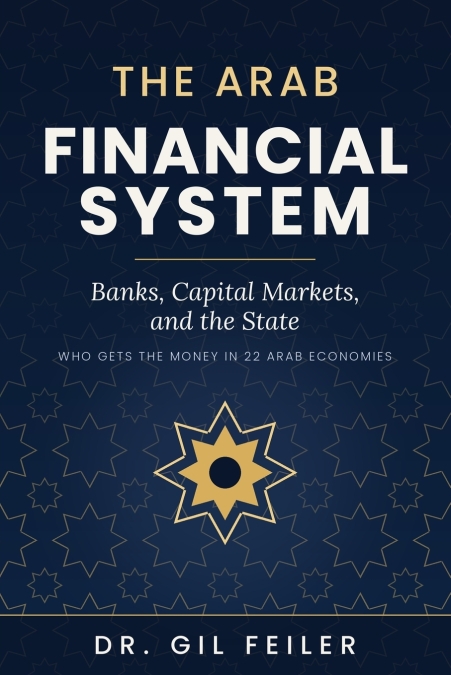
The Arab world holds trillions of dollars in banks, sovereign funds and stock exchanges. Yet suppliers wait months to be paid, depositors in several countries cannot reach their savings, and outside investors find little to buy beyond a handful of state-linked giants. Who actually gets the money?Drawing on four decades of research and investing in the region, Dr. Gil Feiler follows financial claims through central banks, commercial banks, stock exchanges, Islamic finance and financial law in all 22 Arab League jurisdictions, from Saudi Arabia, the UAE, Qatar and Egypt to Lebanon, Iraq, Libya, Sudan, Syria and Yemen. Built on primary sources checked through November 2026, the book shows:why the region’s largest stock-market offerings mostly paid the state and founding owners rather than the companies being listed;how governments act as borrower, owner, depositor and guarantor of the banks at the same time;why, in a large part of the region, the real crisis is the gap between a bank balance and a payment that can actually be made;why small firms remain at the back of the queue even where money is abundant;how Islamic and conventional finance differ less in price than in who carries the risk.Each country chapter ends with the author’s own conclusions. The book introduces a Money Usability Index for all 22 jurisdictions, includes comparative tables of banks, exchanges and the region’s largest listed companies, and closes with ten questions every investor should ask before buying into an Arab offering.An essential guide for investors, bankers, policymakers and students of the Middle East and North Africa.