Jay Thatcher
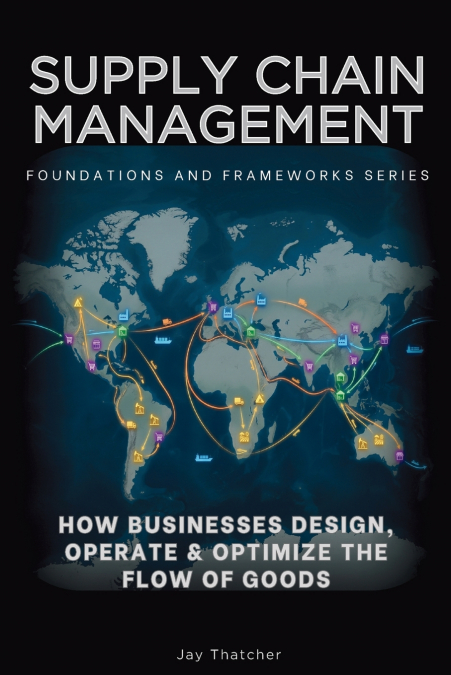
Supply chain management explained from the ground up, with no prior background needed. This book follows a product from raw material to doorstep and shows the decisions that get it there on time and at a price people will pay. Ten chapters move in the same order goods do, so each idea rests on the one before it. The methods arrive with the reasoning behind them and real numbers attached, because knowing why a reorder point works matters more than memorizing the formula. The subject is really a long series of tradeoffs, and this book teaches you to read them: more inventory buys protection against shortages and ties up cash, air freight buys speed at several times the ocean rate, one cheap supplier cuts costs until that supplier has a fire. Ten chapters follow the path a product takes: - The three flows: goods moving forward, information moving both ways, cash moving back - Network design decisions made before a single order ships, including facility location, the warehouse count cost curve, risk pooling, the square root law, and make-or-buy analysis - Forecasting with moving averages, exponential smoothing, and seasonal indices, then measuring the miss with MAPE and tracking signals - The bullwhip effect, and why a small bump in customer demand turns into wild swings at the factory - Sourcing with the Kraljic matrix, weighted supplier scoring, and total cost of ownership - Inventory math you will actually use: economic order quantity, reorder points, safety stock, ABC classification, cycle counting - Production planning from S&OP through master scheduling and MRP, then lean, kanban, postponement, warehouse slotting, cross-docking, and returns disposition - Freight economics across truckload, LTL, rail, ocean, air, and intermodal, plus Incoterms, customs clearance, and tariff classification - Digital systems from ERP and WMS to control towers and IoT tracking, performance metrics including perfect order rate and OTIF, then risk mapping, continuity planning, Scope 3 carbon accounting, and forced-labor due diligence Written for: - Business and logistics students who want the whole picture in plain language - Owners and managers tired of guessing how much stock to hold - Professionals who know one corner of a large operation and want to see the rest of it - Anyone who read about a shortage in the news and got curious about why it happened Every chapter closes with discussion questions, and worked example responses sit in the back alongside a historical timeline of the field, a glossary that defines each term in plain words, and a list of sources for going deeper. Chapters stand on their own, so you can start at the beginning or jump straight to inventory or transportation. Read it once and the ordinary world looks different. You start to see the choices behind a two-day delivery, the reason a product went out of stock, and the logic of where a warehouse sits. Part of the Foundations and Frameworks Series.