Propaganda Machinery

Propaganda Machinery

Agustin V. Startari

22,52 €
IVA incluido
Disponible
Editorial:
MAAT
Año de edición:
2026
Materia
Segunda Guerra Mundial
ISBN:
9798233442353
22,52 €
IVA incluido
Disponible
Añadir a favoritos

Between 1920 and 1933, the National Socialist German Workers’ Party (NSDAP) made propaganda a central component of its political and electoral organization. This book examines that process in the context of the crisis of the Weimar Republic and analyzes how message simplification, repetition, public staging, construction of the adversary, and personalization of leadership expanded the movement’s capacity for mobilization. Drawing on speeches by Adolf Hitler and Joseph Goebbels, the party press, visual material, and historiographical sources, Propaganda Machinery examines the rhetorical and organizational devices that structured National Socialist communication. The analysis pays particular attention to the relationship among language, political emotions, symbols, media of dissemination, and audience segmentation. The approach combines political history, linguistics, rhetoric, and discourse analysis. Propaganda is not presented as a single cause of the Nazi rise to power, but as an instrument whose effectiveness depended on economic, institutional, and social conditions, party organization, and, increasingly, political violence. The study distinguishes party propaganda before 1933 from the state system of propaganda, censorship, and cultural coordination developed after the seizure of power. This distinction makes it possible to examine more precisely which resources were used in electoral competition and which belonged to the subsequent institutionalization of dictatorship.

Artículos relacionados

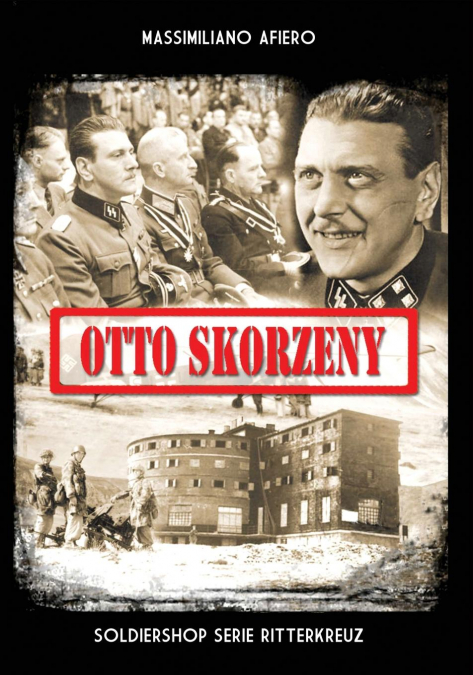
  • Otto Skorzeny
    Massimiliano Afiero
    Quella di Otto Skorzeny è sicuramente una delle figure più controverse ed interessanti della Seconda Guerra Mondiale, alla quale molti storici hanno dedicato articoli e libri, per esaltare o denigrare le sue azioni che nel bene o nel male furono comunque straordinarie: la liberazione del Duce sul Gran Sasso, l'operazione 'Panzerfaust' nell'ottobre del 1944, l'operaz...
    Disponible

    28,71 €

  • A Terrible Revenge
    Alfred-Maurice de Zayas
    ...
    Disponible

    24,93 €

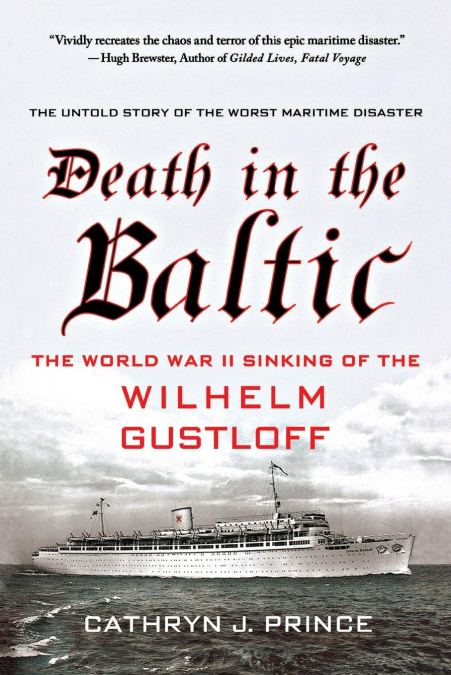
  • Death in the Baltic
    Cathryn J Prince
    January 1945: the outcome of World War II has been determined. The Third Reich is in free fall as the Russians close in from the east. Berlin plans an eleventh-hour exodus for the German civilians trapped in the Red Army’s way. More than 10,000 women, children, sick, and elderly pack aboard the Wilhelm Gustloff, a former cruise ship. Soon after the ship leaves port, three Sovie...
    Disponible

    16,52 €

  • The Greatest Test of Courage
    Ronda Hassig
    Edward Mack had everything: a wife, a newborn son, and his dream job. But as a West Point graduate stationed in the Philippines, his life changed forever on December 7, 1941. Not long after, he would survive the Bataan Death March, Camps O’Donnell and Cabanatuan. At Cabanatuan, he headed an underground operation to get food and medicine for his fellow prisoners. His final desti...
    Disponible

    11,87 €

  • Renatus' Kayak
    Rozanne Enerson Junker
    Woody Belsheim had one question when he gave his niece, Rozanne Enerson Junker, a miniature sealskin kayak made for him in 1944 by Inuit hunter Renatus Tuglavina: Would it be possible for you to find out what happened to Renatus...and to his daughter, Harriot?Woody had seldom spoken about his World War II service when he and six other G.I.s manned a secret American weather stat...
    Disponible

    14,59 €

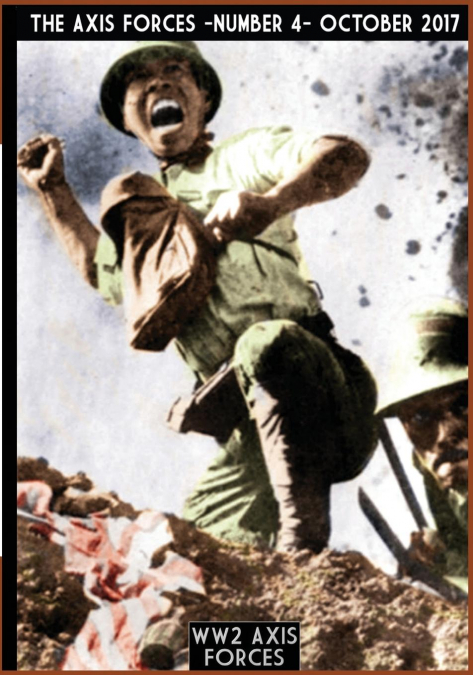
  • The Axis Forces 4
    Massimiliano Afiero
    Book magazine dedicated to the German, Italian and Japanese armed forces and their allies during WW2.In this issue. The battle of Narva 1944, The japan in war, The Italian Alpine Division Monterosa of RSI. Eastern Volunteer insignia. Heinrich Sonne. Knight Cross Holder. ...
    Disponible

    12,71 €

Otros libros del autor

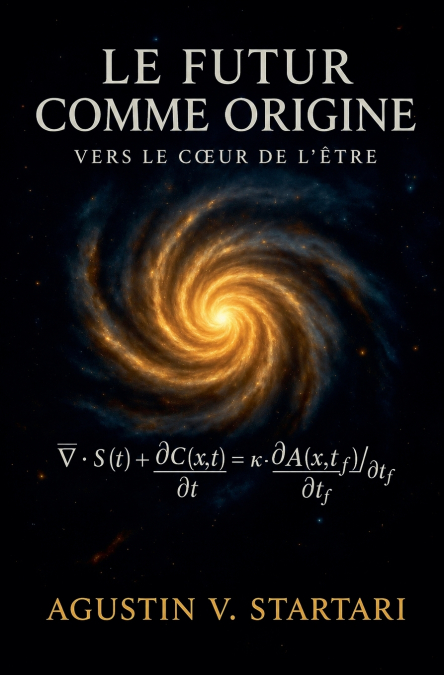
  • Le Futur comme origine
    Agustin V. Startari
    Et si le futur n’était pas la conséquence du passé, mais la force qui organise déjà le présent ?Depuis des siècles, la physique décrit l’univers comme une réalité évoluant à partir de conditions initiales. Mais cette conception de la causalité suffit-elle à expliquer la structure profonde du cosmos ?Dans Le Futur comme origine : Vers le cœur de l’être, Agustin V. Startari propo...
  • Le haut Moyen Âge
    Agustin V. Startari
    Comment les sociétés du haut Moyen Âge ont-elles raconté leur passé, et dans quel but ?Entre le Ve et le XIe siècle, l’écriture de l’histoire dans l’Occident latin connaît de profondes transformations. Les traditions héritées de Rome sont réorganisées au sein des Églises, des royaumes et des monastères. La providence devient un principe majeur d’interprétation, sans pour autant...
  • Façonner le Moyen Âge
    Agustin V. Startari
    Comment le monde romain a-t-il donné naissance à l’Europe médiévale ?Entre 280 et l’an 1000, l’espace méditerranéen et européen connaît de profondes transformations. L’autorité impériale se fragmente en Occident, de nouveaux royaumes apparaissent, le christianisme redéfinit les institutions et les formes de légitimité, tandis que Byzance et l’expansion de l’islam modifient dura...
  • Ukraine et Russie
    Agustin V. Startari
    Pourquoi la relation entre l’Ukraine et la Russie a-t-elle basculé dans la plus grande guerre interétatique en Europe depuis 1945 ?Agustin V. Startari reconstitue plus d’un siècle d’histoire : la chute du tsarisme, l’Holodomor, l’effondrement de l’URSS, la révolution orange, le Maïdan, la Crimée, le Donbas et l’invasion à grande échelle de 2022. Il ne retient aucune explication...
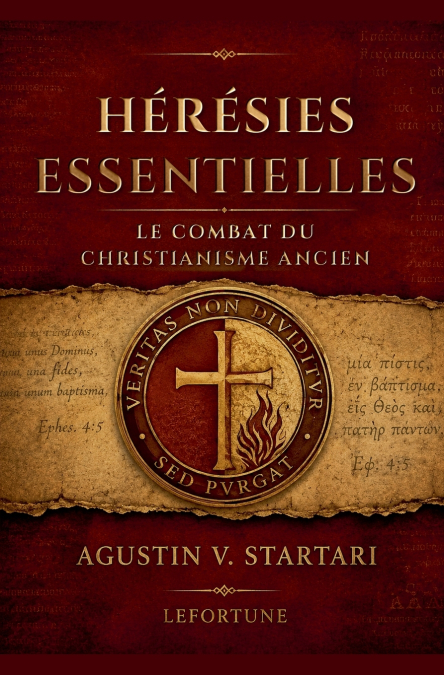
  • Hérésies essentielles
    Agustin V. Startari
    QU’EST-CE QUI SÉPARE la foi de l’hérésie ? Et qui détient le pouvoir de tracer la frontière ?Gnostiques, marcionites, montanistes, ariens, nestoriens, donatistes : l’histoire a retenu leurs noms comme ceux de vaincus. Pourtant, sans eux, l’Église telle que nous la connaissons n’existerait pas.Des premières communautés de disciples de Jésus aux conciles de Nicée, d’Éphèse et de ...
  • Grégoire X
    Agustin V. Startari
    Trente-trois mois sans pape. Des cardinaux enfermés à Viterbe, rationnés par les habitants, incapables de s’accorder. En 1271, l’impasse se dénoue enfin : le collège désigne un homme qui n’est même pas cardinal et qui se trouve alors à Acre, en Terre sainte. Teobaldo Visconti devient Grégoire X.En moins de cinq ans, ce pape inattendu transforme les règles du jeu. Par la constit...