John Freiberg
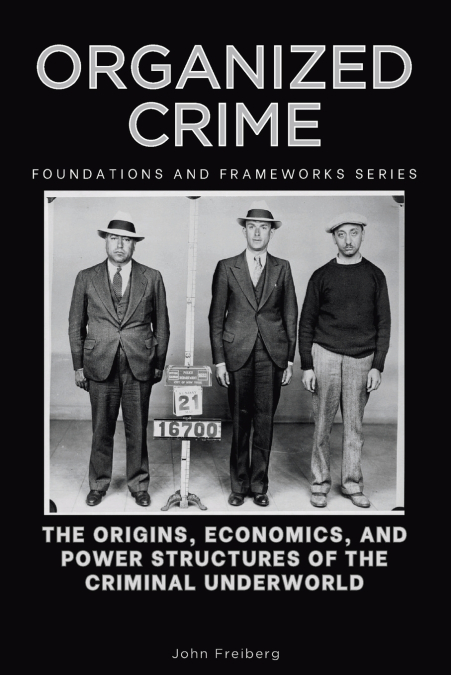
Organized crime runs on markets, protection, and fear, and this book shows you how each piece fits together. Follow the money, the rules, and the people behind the mafia, the cartels, and the gangs that outlast arrests, trials, and new laws. Nine chapters move in three stages. The first explains what counts as organized crime and why it exists, the second opens up how these groups earn money and govern themselves, and the third tests those ideas against real organizations and the governments trying to stop them. Documented cases anchor every idea, from the 2007 Duisburg massacre in Germany to the 1957 Apalachin raid in upstate New York, so the theory never drifts far from what actually happened. The nine chapters walk through: - Competing definitions from the Palermo Convention, RICO, and academic models, and why those differences decide who gets charged - Diego Gambetta’s protection theory, Merton’s strain theory, Daniel Bell’s ladder of mobility, and ethnic succession - Prohibition, power vacuums in Sicily and post-Soviet Russia, and prisons as breeding grounds - Supply chains for drugs, guns, and trafficked people, extortion as an illegal tax, and laundering through placement, layering, and integration - Why street dealers in one Chicago gang earned about $3.30 an hour - Oaths, codes of silence, initiation rituals, and the commissions that keep peace between rival families - Ports, porous borders, cash economies, and offshore secrecy havens - Cosa Nostra, the ’Ndrangheta, the Camorra, New York’s Five Families, the yakuza, the Triads, Medellín, Cali, Sinaloa, CJNG, the vory v zakone, Brazil’s PCC, and MS-13 - Wiretaps, informants, Palermo’s Maxi Trial, and the hard debate over military crackdowns versus legalization - Ransomware, cryptocurrency, fentanyl, and the Southeast Asian scam compounds holding thousands in forced labor Study references fill the back of the book: a timeline running from the 1800s to 2025, discussion questions for every chapter with example responses so you can check your thinking, a glossary of key terms, a full reference list, and annotated recommended readings for going further. This book suits: - Criminology and criminal justice students - True crime readers who want the facts behind The Godfather and Narcos - Journalists, policy readers, and anyone who follows cartel news No background in the field is needed. Every term gets explained in plain language, and every claim ties back to published research, court records, and government data. The next time a cartel boss is arrested or a mafia family goes on trial, you will know the three questions that predict what happens next. What market does this group serve? Who protects it? Who is waiting to take its place? Those questions explain why the 2024 capture of Ismael Zambada split the Sinaloa organization and left hundreds dead.