Adrian Corwin
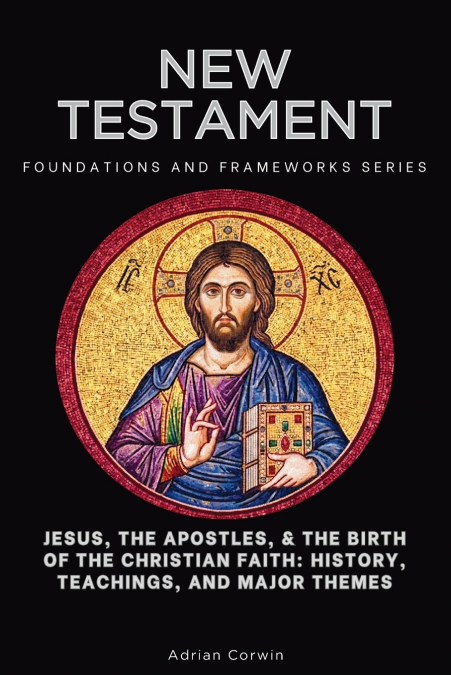
The New Testament is twenty-seven separate documents, written by different people in different cities across roughly seventy years of the first century. This guide gives you the history, the context, and the reading framework the original audience already had. The writers never stopped to explain who the Pharisees were, how the Temple worked, or why Rome mattered, because their first readers already knew. The chapters rebuild that background, then move through the texts themselves and outward into the movement they created, showing what historians have settled and what remains genuinely debated. The book covers: - Second Temple Judaism and its rival parties: Pharisees, Sadducees, Essenes, Zealots - Roman occupation, Herodian client rule, Hellenism, and the Greek Septuagint that carried Jewish scripture across the eastern Mediterranean - How the collection came together, from oral transmission and papyrus fragments to the canon lists of Marcion, the Muratorian Fragment, and Athanasius - The Synoptic Problem and the Q hypothesis - Why John tells a different story on a different timeline, and which gospels were left out of the twenty-seven - The life of Jesus: infancy narratives, the baptism at the Jordan, the Galilean healings, the Twelve, the women who followed him, and the conflict that ended in Jerusalem - The kingdom of God, the parables, the Sermon on the Mount, and his treatment of Torah and Sabbath - The Last Supper, Gethsemane, the hearings before the Sanhedrin and Pontius Pilate, crucifixion as Roman practice, and the reports of an empty tomb - Peter and James in Jerusalem, the persecution that scattered believers, and the Council decision that let Gentiles join without becoming Jewish first - Paul from the Damascus road through his city missions, with a clear guide to the seven letters nearly all scholars accept as his and the six that are still argued over - Hebrews, the General Epistles, the four standard approaches to Revelation, and the slow separation of church from synagogue Every chapter closes with discussion questions, and worked example answers in the back let you check your thinking against a full response. A first-century timeline, a glossary covering terms like synoptic, eschatology, and Septuagint, plus works cited and recommended readings round out the volume. Written for: - Students in a New Testament or religious studies course - Church members who want firmer historical footing - Self-directed readers curious about where these documents came from You don’t need to hold any particular belief to use this book. It treats these documents as history and literature, lays out what the documents actually say, and marks the places where careful people reach different conclusions. Read it straight through and it builds in a sensible order. Keep it on the shelf and it answers specific questions on demand, whether you need the Synoptic Problem in Chapter 3 or the Jerusalem Council in Chapter 7.