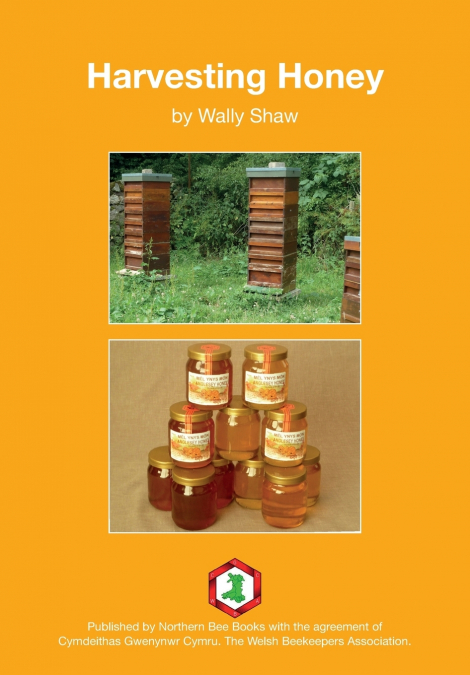
Harvesting Honey

Harvesting Honey

Wally Shaw

24,42 €
IVA incluido
Disponible
Editorial:
Peacock Press
Año de edición:
2018
Materia
Apicultura (cría de abejas)
ISBN:
9781912271368
24,42 €
IVA incluido
Disponible
Añadir a favoritos

The aim of this booklet is to help beekeepers to better understand honey itself and to harvest and prepare it for home use or sale retaining as much of its essential properties as possible. What exactly is honey, for it is certainly a lot more than a solution of various sugars in water? If we are to produce good honey it is important to understand how it should be handled in all stages between the hive and jar because in reality it is quite a delicate product. Stories about finding four thousand year old honey in Egyptian tombs and “and it was just as good as the day it was put there” are just that – stories. There are many similarities between honey and wines; they both need great care in their production, handing and storage if they are to develop and retain their full potential. It is generally accepted that the `best` honey comes straight from the comb (cut comb or sections). The various processes that we use to get pristine honey from the comb into a jar all have the potential to damage it in some way. In Britain we currently get a premium price for home-produced honey (the envy of beekeepers in many other parts of the world) and it is our responsibility to see that we bring a top quality product to market.
Artículos relacionados

  • The American Bee Journal, Volume VI, Number 3, September 1870
    Various
    In September 1870, American beekeepers exchanged practical observations, experimental findings and hard-won solutions through a developing national culture of apiculture. This issue of The American Bee Journal, Volume VI, Number 3 preserves that world in detail, covering foulbrood disease research, wintering bees, feeding methods, honey-producing plants and the management of pr...
    Disponible

    19,61 €

  • The American Bee Journal. Volume XVII No. 11, March 1881
    Various
    Published in Chicago on 16 March 1881, this issue of The American Bee Journal offers a vivid primary source on the methods, concerns and commercial world of nineteenth-century beekeeping. Edited by Thomas G. Newman, Volume XVII No. 11 brings together editorial commentary, practical reports, correspondence, market quotations, convention notices and trade information for readers ...
    Disponible

    18,77 €

  • The American Bee Journal. Vol. XVII, No. 12, Mar. 23, 1881
    Various
    In March 1881, beekeepers were testing new methods, comparing bee races and recording the successes and failures of winter colonies. The American Bee Journal. Vol. XVII, No. 12 preserves this working record of late nineteenth-century apiculture, edited by Thomas G. Newman and assembled from correspondence, editorial comment, exchange reports and practical observations.The issue...
    Disponible

    18,77 €

  • The American Bee Journal. Vol. XVII. No. 14. April 6, 1881
    Various
    Published in the aftermath of the severe winter of 1880-81, The American Bee Journal. Vol. XVII. No. 14. April 6, 1881 captures the practical realities and commercial ambitions of nineteenth-century apiculture. Edited by Thomas G. Newman, this issue brings together editorials, technical discussions, reports, correspondence and readers’ letters on the problems confronting beekee...
    Disponible

    21,08 €

  • La Ruche De Layens Modernisee
    Jean Hurpin
    ...
    Disponible

    24,46 €

  • An Economico-philosophical discourse on Bee Culture
    Frank Vernon
    This little booklet was acquired by Mrs. Daphne Perrett (More) at a bookshop in Southampton c. 1980. It had been rejected by a Bee Book dealer as ‘of no interest’. Did the Latin text make it difficuIt to selI?The book, printed by the Academic Press of the University of Erfurt in 1770, appears to be a thesis presented by J. F. E. Albrecht for his doctorate examination. One of Er...
    Disponible

    22,99 €

Otros libros del autor

  • An Apiary Guide to Swarm Control
    Wally Shaw
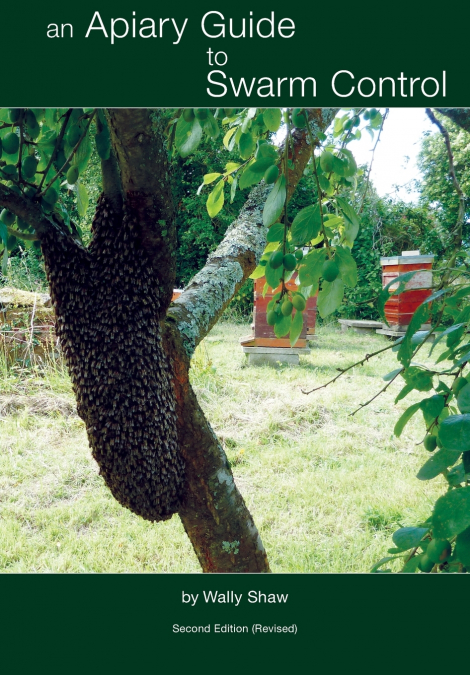
    There is no doubt that swarm control is simultaneously the most important and most difficult aspect of colony management with which beekeepers have to deal - if they chose to do so, of course. Swarming is also the most complex of the many behaviours that have evolved to enable a honey bee colony to successfully complete its life-cycle. This revised edition incorporates experien...
    Disponible

    25,77 €

  • Feeding Bees
    Wally Shaw
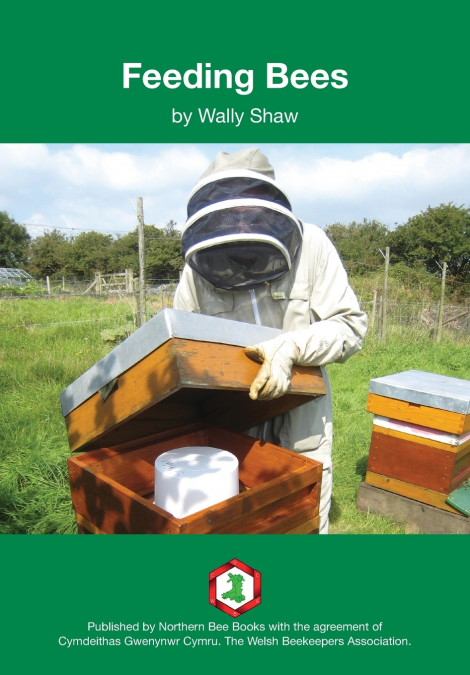
    Honey bees collect two types of food material; nectar and pollen. With the collection of nectar there is no evidence that there is any selection based on its nutrient value, other than as a source of energy (their dietary carbohydrate). Pollen is their source of protein and lipids (fats). By contrast, foraging for this vital material is much more complex and seems to be based o...
    Disponible

    21,52 €

  • Comb Management
    Wally Shaw
    Honey bees can successfully live in all sorts of different nest sites – a holein a tree, a chimney pot or a bee-hive – but in all cases this is just a cavity inwhich to make a set of combs. It is in and on these combs that all the withinthe colony functions occur. Because it is dark in the hive, communication isthrough pheromones or vibration and combs provide the ideal carrier...
    Disponible

    25,37 €

  • There are queen cells in my hive
    Wally Shaw
    ...
    Disponible

    24,12 €

  • Simple Methods of Making Increase
    Wally Shaw
    ...
    Disponible

    22,77 €