Isabel Voss
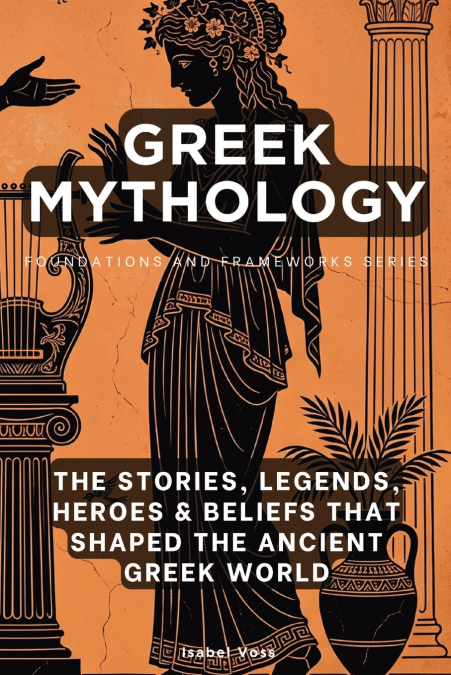
Greek mythology stops being a pile of names once you have the structure. This book gives you the framework first, in the order the Greeks themselves used: where the world came from, who rules it, what mortals can achieve, and what waits after death. There was never an official version of a Greek myth. Hesiod says Aphrodite rose out of sea foam; Homer calls her the daughter of Zeus and Dione. Both accounts circulated and neither was considered wrong. When two ancient sources disagree, you’re told who said what. Greek names are used throughout with Roman equivalents noted, no prior reading is assumed, and certainly no Greek is required. Nine chapters, arranged the way Greek belief was built: - Where the evidence comes from: Homer and Hesiod around 700 BCE, Bronze Age clay tablets from Pylos and Knossos that already name Poseidon and Dionysus, and the Hittite poem that tells the castration story centuries before Hesiod did. - Chaos, Gaia, and the first Titans. - Three generations of rulers, each removed by his own child, ending with a ten-year war, the division of the cosmos by lot, and Typhon. - The twelve Olympians with their birth stories, quarrels, and the attributes that identify them in art. Poseidon’s trident, Hermes’ winged sandals, Athena’s owl and snake-fringed aegis. - Prometheus, Atlas, the Muses, river gods, and personified powers like Nemesis, Tyche, and the three Moirai. - Herakles and the Twelve Labors, Perseus and Medusa, Bellerophon, Theseus and the Minotaur, Jason and Medea, and the cursed house of Thebes. - The Trojan War in full, filled in from the Epic Cycle beyond the weeks Homer covers, through the sack of Troy and the returns home. - The underworld mapped: rivers, Charon, Cerberus, the three judges, the punishments of Tantalus and Sisyphus, and the few living men who went down and came back. - What worshippers actually did at the altar, at Delphi, and at Eleusis, plus how later ages reread the whole system, including Plato, Ovid, Freud, Jung, and Levi-Strauss. Written for: - Beginners or students meeting classical material for the first time - Teachers who want a course companion and discussion questions ready to use - Museum visitors who want to read a vase without the label - Anyone who has finished a modern retelling and wants to know which parts are ancient Every chapter closes with questions, and worked example answers let you check your reasoning against a full response. A timeline places any source in its period, covering Mycenaean palace records, the Archaic poets, the Athenian playwrights, the Hellenistic collectors, and the Roman adapters. A glossary defines xenia, kleos, katabasis, chthonic, and hubris, words that appear constantly in scholarship and are rarely explained. Work through it once and you will have a system you can apply to any story, painting, or film you meet next.