MD Ramon C. Henson
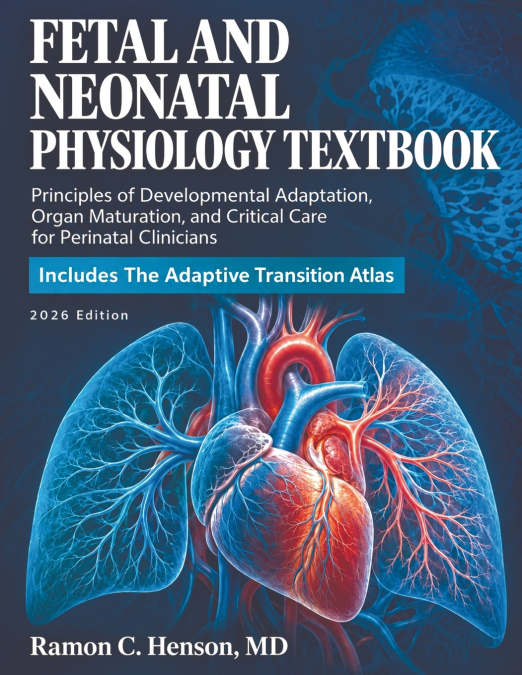
Connect Developmental Mechanisms to Perinatal Decisions Fetal and Neonatal Physiology Textbook 2026-2027 traces human physiology from placental dependence through birth transition, organ maturation, and intensive care. Written for perinatal clinicians, it explains how gestational age, maternal conditions, labor, postnatal time, and treatment exposure change the meaning of bedside measurements. Mechanistic chapters connect cellular regulation to whole-body adaptation, limited reserve, and clinical failure. Readers gain a consistent method for distinguishing expected adaptation from delayed transition and decompensation while keeping cross-system consequences visible. The book develops practical capability across the full developmental arc: Placental exchange, endocrine signaling, and fetal circulation - interpret oxygen delivery and growth as linked maternal-fetal processes Labor, lung aeration, and shunt reversal - recognize the sequence that establishes independent cardiopulmonary function Respiratory mechanics, hemodynamics, renal handling, and metabolism - separate primary failure from compensatory change Neurologic maturation, cerebral autoregulation, and reperfusion - follow energy delivery and injury across time Prematurity, placental insufficiency, shock, and pulmonary vascular disease - identify the reserve limits that shape instability Nutrition, immunity, skin barrier, sleep, and developmental pharmacology - integrate supportive care with ongoing maturation The Adaptive Transition Atlas - move from physiologic state through transition driver, expected response, failure signature, and clinical anchor Use this mechanism-centered reference to interpret trajectories, target support, and reassess the newborn response confidently with greater physiologic precision.