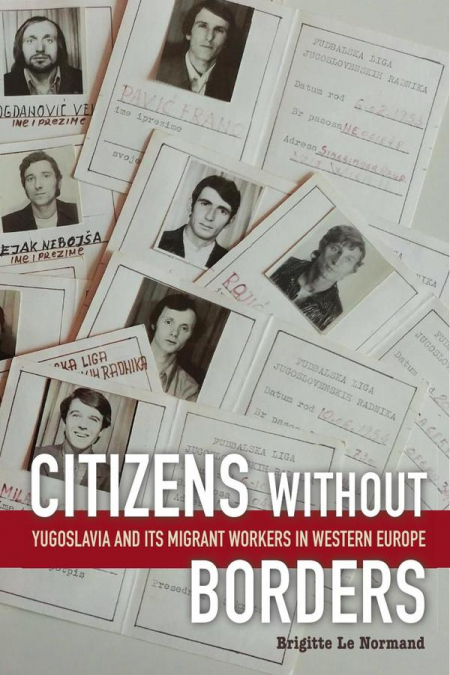
Citizens without Borders

Citizens without Borders

Le Norm

34,27 €
IVA incluido
Disponible
Editorial:
University of Toronto Press - 35
Año de edición:
2021
Materia
Guerras napoleónicas
ISBN:
9781487525156
34,27 €
IVA incluido
Disponible
Añadir a favoritos

Among Eastern Europe’s postwar socialist states, Yugoslavia was unique in allowing its citizens to seek work abroad in Western Europe’s liberal democracies. This book charts the evolution of the relationship between Yugoslavia and its labour migrants who left to work in Western Europe in the 1960s and 1970s. It examines how migrants were perceived by policy-makers and social scientists and how they were portrayed in popular culture, including radio, newspapers, and cinema._x000D_ Created to nurture ties with migrants and their children, state cultural, educational, and informational programs were a way of continuing to govern across international borders. These programs relied heavily on the promotion of the idea of homeland. Le Normand examines the many ways in which migrants responded to these efforts and how they perceived their own relationship to the homeland, based on their migration experiences. Citizens without Borders shows how, in their efforts to win over migrant workers, the different levels of government – federal, republic, and local – promoted sometimes widely divergent notions of belonging, grounded in different concepts of ’home.’
Artículos relacionados

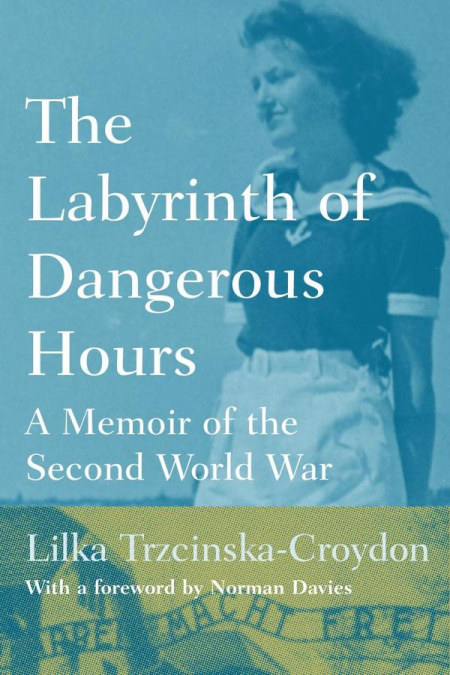
  • Labyrinth of Dangerous Hours
    Trzcinska-Croydon
    Lilka Trzcinska was fourteen years old when the Nazis invaded Poland in 1939. The daughter of an architect, Lilka was a high school student at the time. When schools were closed by the occupier, she, along with her siblings, continued their education in secret classes, and joined the Polish Home Army (the secret resistance force)._x000D_ Lilka and her family were arrested by th...
    Disponible

    29,07 €

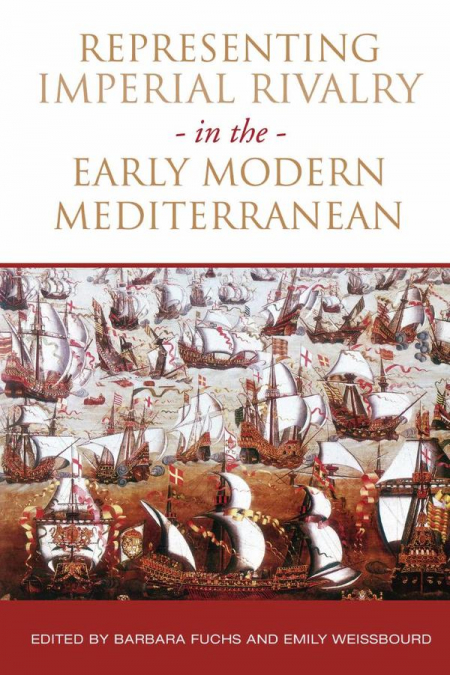
  • Representing Imperial Rivalry in the Early Modern Mediterranean
    Fuchs / Weissbourd
    Representing Imperial Rivalry in the Early Modern Mediterranean explores representations of national, racial, and religious identities within a region dominated by the clash of empires. Bringing together studies of English, Spanish, Italian, and Ottoman literature and cultural artifacts, the volume moves from the broadest issues of representation in the Mediterranean to a case ...
    Disponible

    33,80 €

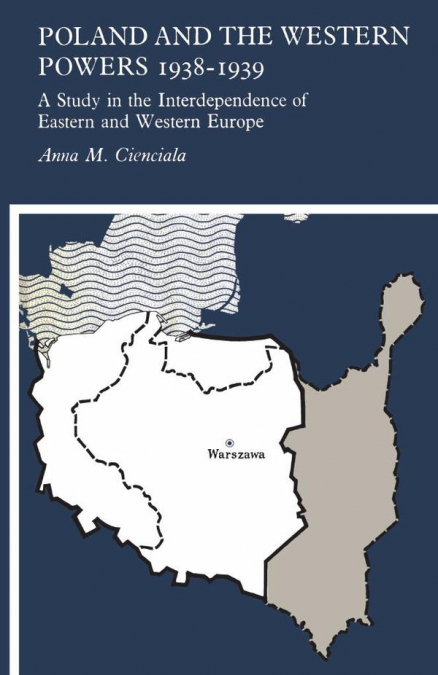
  • Poland and the Western Powers 1938-1939
    Cienciala
    This study has two objectives. The first is to explain the nature and historical roots of the problems facing Polish foreign policy in 1938–39 and the manner in which they were approached by the men who shaped and directed Polish diplomacy. The second is to illustrate the political interdependence in these years of Eastern and Western Europe. This interdependence hinged on the ...
    Disponible

    44,20 €

  • Young Europe and the Birth of Modern Nationalism in the Slavic World
    Procyk
    Giuseppe Mazzini’s Young Europe and the Birth of Modern Nationalism in the Slavic World examines the intellectual currents in Eastern Europe that attracted educated youth after the Polish Revolution of 1830–1. Focusing on the political ideas brought to the Slavic world from the West by Polish émigré conspirators, Anna Procyk explores the core message that the Polish revolutiona...
    Disponible

    32,24 €

  • Galicia
    HANN CHRISTOPHER
    Habsburg Galicia was an area in central Europe covering territory presently occupied by Poland and Ukraine that was distinctive for its multi-ethnic character. With the unraveling of the Austro-Hungarian Empire following the First World War, a new political map of Europe emerged, one based on the principle of the nation-state. The very concept of the nation-state, however, was ...
    Disponible

    52,99 €

  • Sickle and Veil
    Simic
    Communist gender policies were often violent, placing many people, particularly women, in difficult and marginalized positions. Targeted individuals were rarely consulted, yet their clothing and bodily practices were consistently policed and politicized. Across Central Asia, veils, the fez, shalvari, circumcision, and even Muslim names were banned or stigmatized._x000D_ Sickle ...
    Disponible

    62,92 €