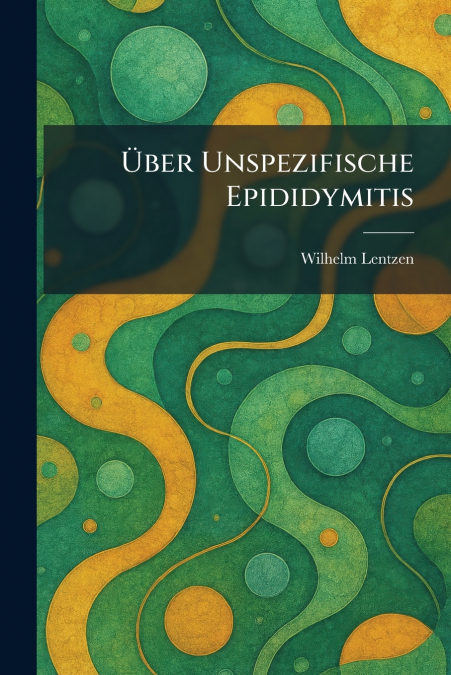
Wilhelm Lentzen
'Ueber Unspezifishe Epididymitis' ist eine tiefgreifende medizinische Abhandlung, die sich mit der Diagnose und den klinischen Merkmalen unspezifischer Entzündungen des Nebenhodens auseinandersetzt. Wilhelm Lentzen präsentiert in diesem Werk eine systematische Untersuchung pathologischer Zustände, die über die damals häufiger behandelte tuberkulöse Form hinausgehen.Das Buch bietet wertvolle Einblicke in die urologische Praxis und Forschung der späten 1920er Jahre. Es analysiert Krankheitsverläufe, ätiologische Faktoren und die differenzialdiagnostische Abgrenzung verschiedener Entzündungsformen. Für Medizinhistoriker und Fachärzte stellt diese Arbeit ein wichtiges Zeugnis der wissenschaftlichen Entwicklung in der Männerheilkunde dar. Durch die detaillierte Darstellung klinischer Beobachtungen leistet das Werk einen wesentlichen Beitrag zur Dokumentation der Behandlungsmethoden und des medizinischen Wissens jener Epoche. Die klare Struktur und die fachliche Tiefe machen es zu einem relevanten historischen Referenzwerk für das Studium entzündlicher Erkrankungen der männlichen Geschlechtsorgane.This work has been selected by scholars as being culturally important, and is part of the knowledge base of civilization as we know it. This work was reproduced from the original artifact, and remains as true to the original work as possible. Therefore, you may see the original copyright references, library stamps (as most of these works have been housed in our most important libraries around the world), and other notations in the work.This work is in the public domain in the United States of America, and possibly other nations. Within the United States, you may freely copy and distribute this work, as no entity (individual or corporate) has a copyright on the body of the work.As a reproduction of a historical artifact, this work may contain missing or blurred pages, poor pictures, errant marks, etc. Scholars believe, and we concur, that this work is important enough to be preserved, reproduced, and made generally available to the public. We appreciate your support of the preservation process, and thank you for being an important part of keeping this knowledge alive and relevant.